Clarence Jordan, co-founder of Koinonia Farm, wrote, “The Good News of the resurrection is not that we shall die and go home with him, but that he is risen and comes home with us, bringing all his hungry, naked, thirsty, sick, and prisoners with him.”
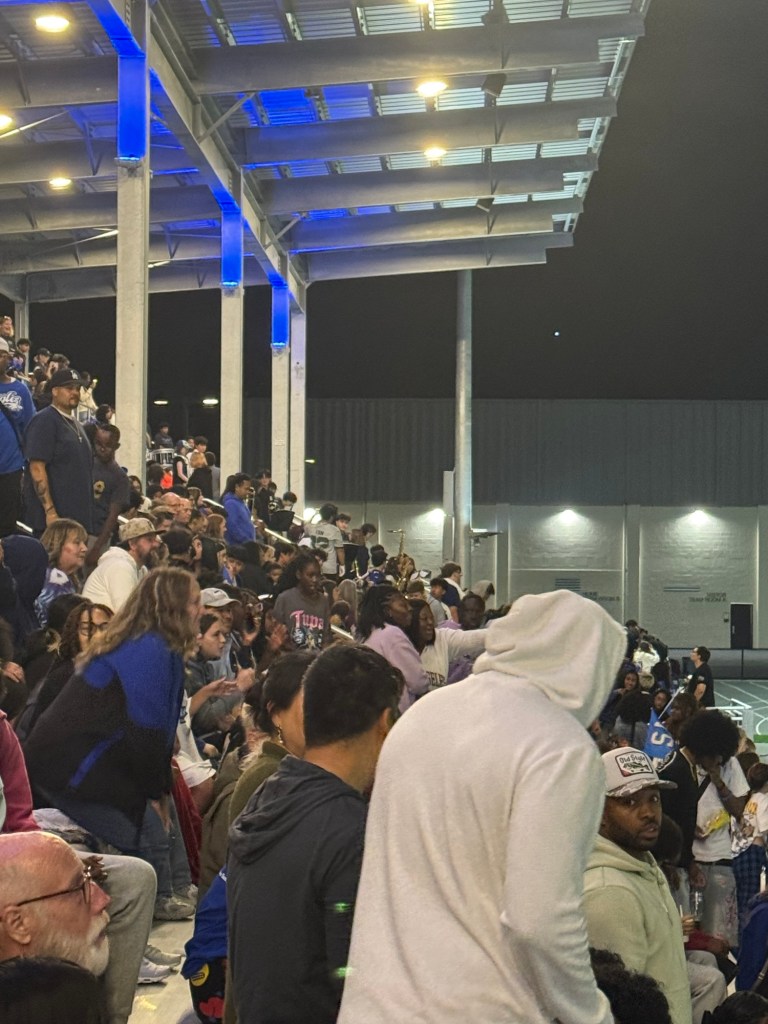
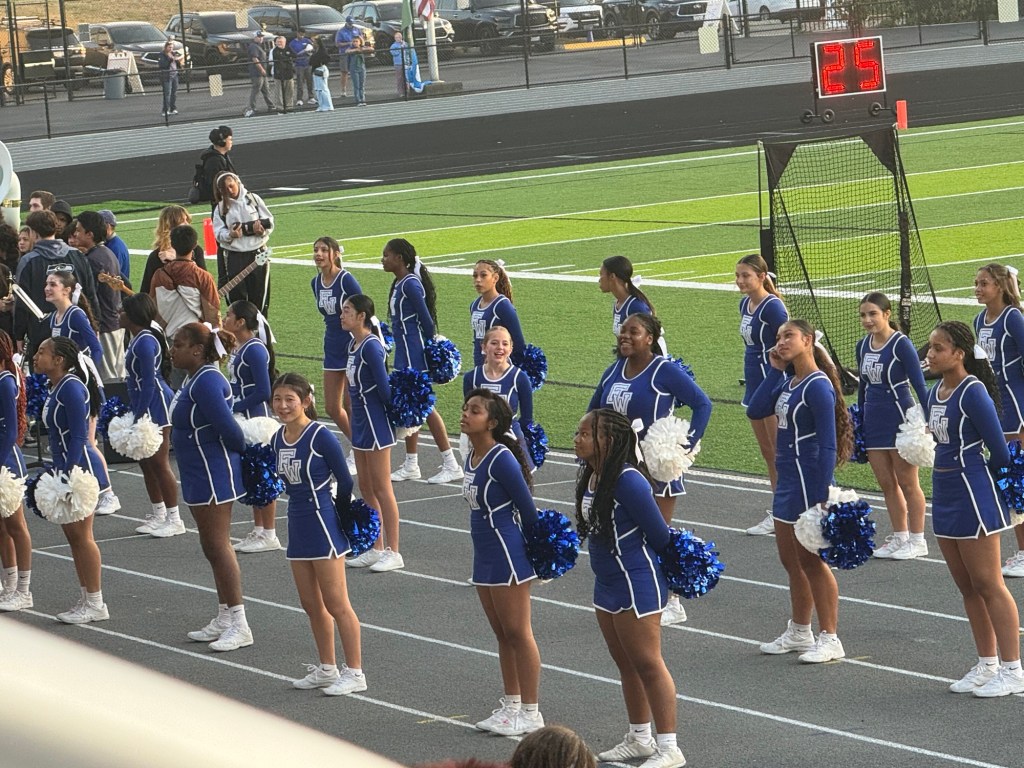
The joy of this morning was cheering on the local high school teams as they had cross country races. The cool thing: I only heard cheering – no tearing down – no debates – no one monopolizing the voice of others – just people doing what they are called to do – building each other up in love through mutual encouragement.
1 Thessalonians 5:11 Therefore encourage one another and build up one another, just as you also are doing.
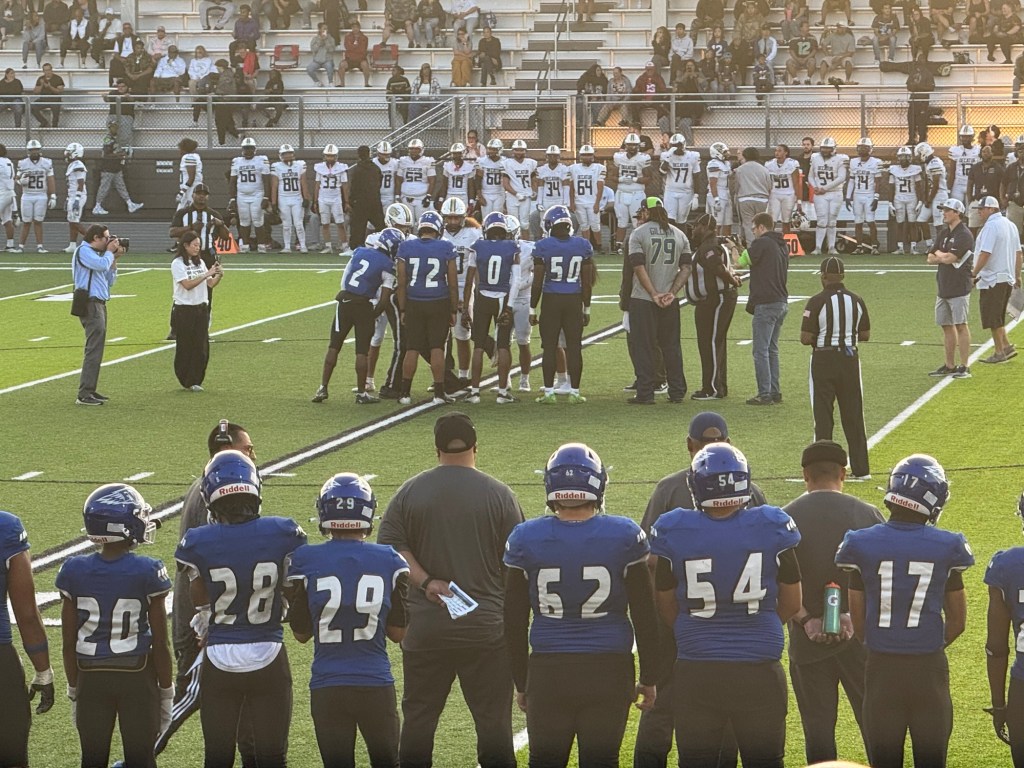
We experienced the same last night at a local football game.
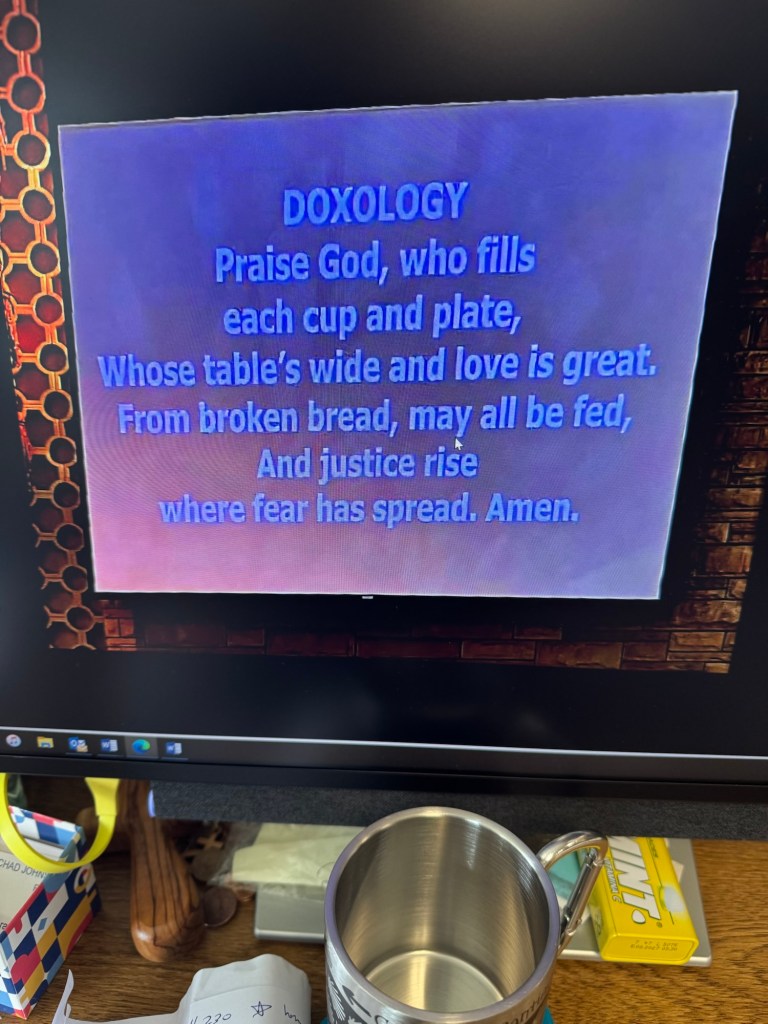
The time clock and the scoreboard held the results of the competition, but how we lived as a community during those times are the deposits of our future humanity. May it bear good fruit in our lives together.
Tatian the Assyrian, a second-century theologian, wrote “Die to the world by renouncing the madness of its stir and bustle. God created nothing evil. It is we who brought forth wickedness. Those who brought it about can also do away with it again.”
Lord stir up the remnants of your goodness in us so that we together might proclaim, “Another world is possible!”
I recently attended the athletic director session at Federal Way High School. A smattering of parents from kids in different sports were there. Lots of good information was shared. We are happy to be part of their teams!
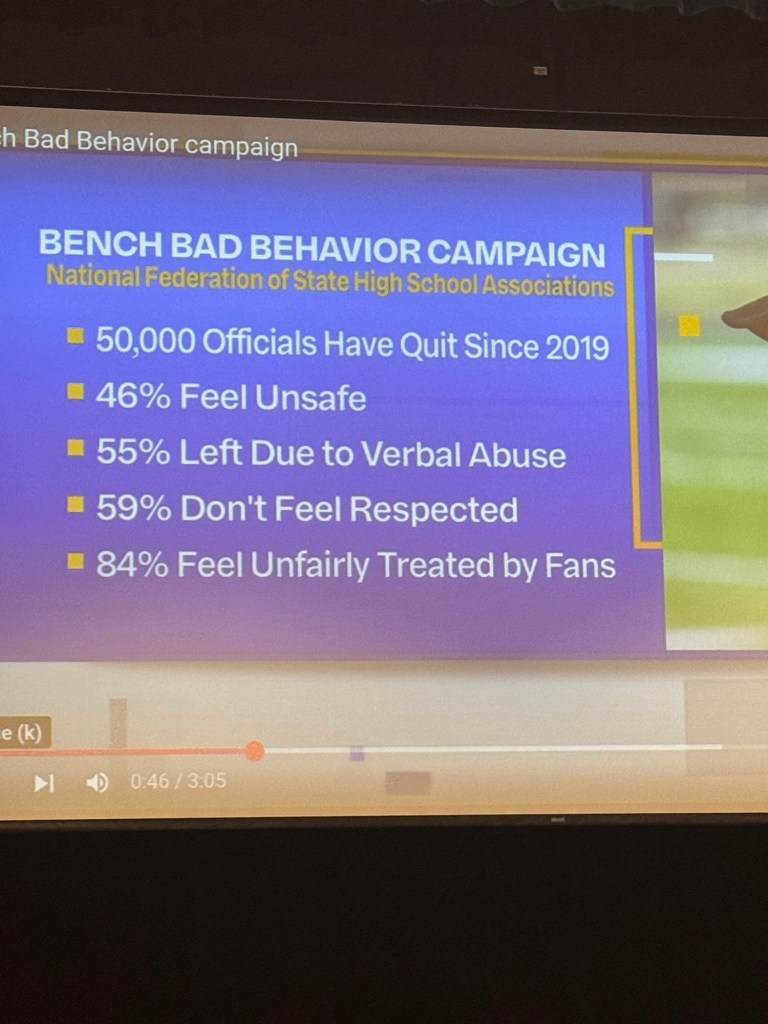
At one moment in the evening, the director shared a shocking stat:
Yes we live in a culture where referees feel unsafe. They can’t recruit new folks to say yes. Games have to be played almost every night of the week because the few refs they do have end up working all the different shifts. The district we are in used to have 156 refs and now they are down to 45. The threat of violence, acts and words of disrespect, and lack of accountability, total up to a disasterous way of being in the world and it is affecting all of us. Every sphere of life is being impacted by the violent cultures we live within. It’s exhausting – devastating – it is killing us.
On a day when more assassinations take place and school shootings ring out we mourn and are wrenched into absolute devastation. Lord lord help us.
I am thankful for these words from Leonard Sweet today, on a day when I have sighs too deep for words.
Some Thoughts on Violence and the Loss of Humanity – Sweet
When Mahatma Gandhi came to England in the 1930s for talks on Indian self-rule, a reporter asked him what he thought of Western civilization. Gandhi, who had just visited the London slums, famously replied, “I think it would be a very good idea.” His point was piercing: the word civilization implies civility, humanity, and neighborliness—but these are often the very things missing in our cultural practice.
Today, we live in what might be called an anger and assassination culture. Violence—whether verbal, digital, or physical—has become a first resort when facing disagreement. To disagree is no longer to enter a conversation; it is to declare war. We cancel, we condemn, we caricature, and too often, we kill.
Why? Because we are losing our humanity. Civilization is dimming. Civility is crashing. Humanity itself is waning and wanting. The world needs a Jesus-shaped humanity more than ever: one that does not strike back but turns the other cheek, one that does not curse enemies but prays for them, one that does not pick up the sword but carries the cross.
Without the restoration of our humanity, we truly should “be afraid—be very afraid.” That phrase, lifted from the 1986 film The Fly, was originally a warning about what happens when human beings merge with something less than human. It is a parable for our moment: we are mutating into something monstrous when we abandon the image of God in ourselves and in others.
But with the restoration of our humanity, fear loses its grip. Violence is no longer the knee-jerk reflex. Battles are won not by sending in the cavalry, but by showing civility. Not with hostility, but with hospitality. Not with the sword, but with the Spirit.
So what transforms the human into the humane? What is the “e” that makes the difference?
Empathy. To feel with, to suffer with, to listen before lashing out.
Engagement. To move toward, not away from, those who differ from us.
Encouragement. To speak life instead of cursing death.
But the greatest “E” is Emmanuel—God with us. Jesus is the Word made flesh, humanity in its fullest bloom, divinity embodied in solidarity with the broken and the enemy alike. Only Emmanuel restores what we have lost. Only Emmanuel re-humanizes the dehumanized. Only Emmanuel makes it possible to live fearlessly, even in an age of anger and assassination.
If we live in Emmanuel, the culture of death is displaced by a culture of life. Fear gives way to faith. Enmity gives way to embrace. Humanity, once lost, is found again in Him.
When the world tilts and the systems fail, when the warnings come clear and the turbulence starts— steady our hands, our hearts, our hope. Teach us not to look away, but to stay with each other in the silence between knowing and acting. Where fear tempts us into denial, awaken us to courage. Where numbness dulls our response, stir our compassion. May we become, for one another, a presence that anchors, a voice that calms, a spirit that refuses to abandon love in the face of collapse.
This phrase was said to me many times. How about you? Josiah Queen takes that phrase and makes a beautiful song that redeems those words and points us back to God’s love for us. Our family loves jamming to this song on our roadtrips. Please remember always who and whose you are!
Intro] Watch your mouth, boy, don’t you talk like that The holes inside my hands show you have all my love
[Verse 1] I know that I’m not good enough Know I will never measure up My hands are about to fold It’s hard to get up out of bed I look up to the sky, and I say “I’m done, I’m done” And He said
[Chorus] Watch your mouth, boy, don’t you talk like that The holes inside my hands show you have all my love (Oh-oh-oh-oh-oh) You’re my child, the apple of my eye The holes inside my side show you have all my love (Oh-oh-oh-oh-oh) So why wouldn’t you live life like you were worth me dying for?
[Verse 2] And my dearest of apologies The finding of the death of me I found the Lord I give up giving into lies I’m trading all my deaths for life I remember what you said to me
[Chorus] Watch your mouth, boy, don’t you talk like that The holes inside my hands show you have all my love (Oh-oh-oh-oh-oh) You’re my child, the apple of my eye The holes inside my side show you have all my love (Oh-oh-oh-oh-oh) So why wouldn’t you live life like you were worth me dying for?
[Interlude] Hey You have all my love
[Chorus] Watch your mouth, boy, don’t you talk like that The holes inside my hands show you have all my love (Oh-oh-oh-oh-oh) You’re my child, the apple of my eye The holes inside my side show you have all my love (Oh-oh-oh-oh-oh) So why wouldn’t you live life like you were worth me dying for?
This wall painting in Kent provides a beautiful reminder that we are meant to be an offering. We all have something to give. Our actions and our inactions speak more loudly than words ever will.
Of my my favorite hymns is a beautiful guiding prayer:
We are and Offering – Chris Christian 1984
We lift our voices We lift our hands We lift our lives up to You We are an offering Lord use our voices Lord use our hands Lord use our lives they are Yours We are an offering
All that we have All that we are All that we hope to be We give to You We give to You
We lift our voices We lift our hands We lift our lives up to You We are an offering Lord use our voices Lord use our hands Lord use our lives they are Yours We are an offering
All that we have All that we are All that we hope to be We give to You We give to You
If I can stop one heart from breaking, I shall not live in vain: If I can ease one life the aching, Or cool one pain, Or help one fainting robin Unto his nest again, I shall not live in vain.








 Johnson 2025 Sabbatical